


🧠 Tech & Innovation | Nolan Voss
We have spent the last two decades digitizing every aspect of our external lives. We curate our social media feeds, edit our photos to perfection, and delete embarrassing tweets. Yet, the most crucial database of all—the squishy, three-pound enigma housed within our skulls—has remained stubbornly read-only. Our memories, the very architecture of our identity, are fixed, sometimes tragically so, scarred by trauma or faded by time. But what if that changed tomorrow? What if the sci-fi trope of “uploading knowledge” or “erasing painful experiences” wasn’t just a cinematic fantasy, but an inevitable engineering milestone? The barrier between the human mind and digital intervention is dissolving faster than most realize. We are standing on the precipice of the “Neuro-Correction Era,” a moment where the tools to debug the human mind are finally coming online. It promises liberation from PTSD and the democratization of genius, but it also threatens the fundamental definition of what it means to be an authentic human being.

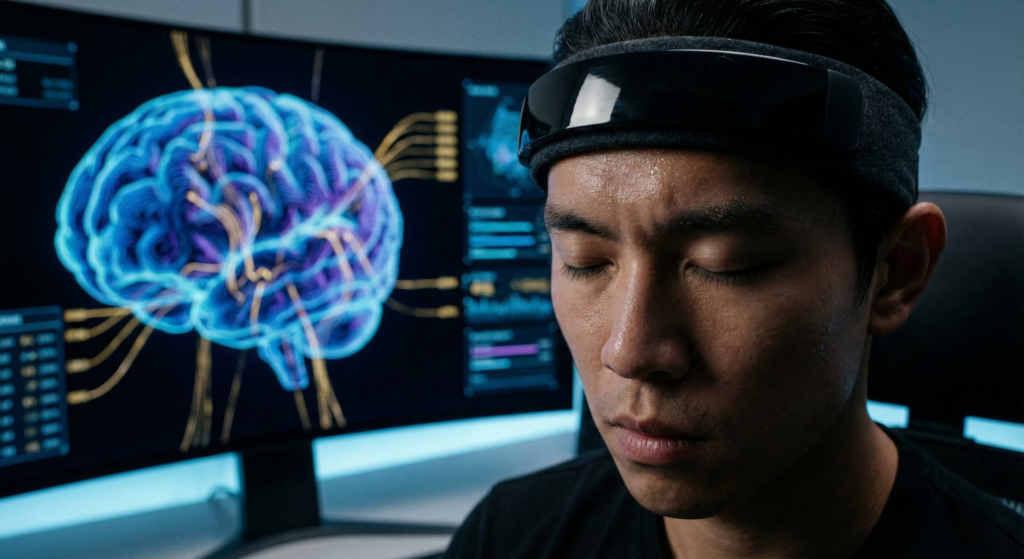
For years, the headline-grabbing advancements in Brain-Computer Interfaces (BCIs) have focused on motor function restoration. Companies like Neuralink and Synchron have achieved miracles, allowing paralyzed patients to control cursors with their thoughts. This is “read-only” access—decoding electrical signals from the motor cortex and translating them into digital commands. It is profound, but it is ultimately an output mechanism. The real paradigm shift, buried deep in academic papers and DARPA-funded research, is the move toward writing back to the brain. Researchers are no longer just listening to the symphony of neural firing; they are learning how to compose it. Recent deep-dive literature indicates significant strides in identifying memory engrams—the specific physical traces in the brain that constitute a memory. In highly controlled animal studies, neuroscientists using optogenetics have successfully “tagged” fearful memories in mice and subsequently dampened the associated neural pathways, effectively neutralizing the trauma response. The implication is staggering: if you can isolate the neural signature of a specific memory, you can theoretically modify it.

The gravity of this transition was highlighted in a recent, leaked audio recording from an invite-only neuroethics symposium, a fragment of which Spherita obtained. The speaker, a leading computational neuroscientist whose identity we have verified, laid out the reality of the current R&D landscape with chilling clarity. “We are crossing a threshold now,” the recording states. “It’s no longer just about reading motor cortex signals to move a cursor. The latest animal trials suggest we can identify specific neural patterns associated with traumatic memories. If you can identify them, theoretically, you can dampen them. Or, conversely, amplify patterns associated with learning. We aren’t just observing the mind anymore; we are grabbing the pen.” That phrase—”grabbing the pen”—is the crux of the upcoming societal upheaval. Moving from passive observation to active authorship of our own neural pathways fundamentally alters the human condition. It suggests a future where cognitive behavioral therapy is replaced by a neural firmware update, or where months of studying a new language could be compressed into a direct neural download of vocabulary protocols.

If we can “grab the pen,” who gets to decide what is written? The potential for therapeutic good is immense—curing intractable PTSD, addiction, or severe depression by rewiring faulty circuits is a noble goal. However, the dual-use nature of this technology opens a Pandora’s box of existential risks that make current debates over AI bias look quaint. If memories can be dampened, can they be implanted? Could bad actors hack a BCI to insert false narratives into a political opponent’s mind, or erase the guilt of a criminal? Furthermore, if we can edit out our suffering, do we risk losing the resilience and wisdom that is often forged in the fires of hardship? A sanitized mind might be pain-free, but it would also be tragically shallow. We face a future where the wealthy could afford “premium cognitive packages,” creating a new biological caste system of enhanced super-learners versus the “legacy human” population. The technology is racing ahead, unburdened by regulation, while our ethical frameworks are still stuck in the analog age.

This technology isn’t decades away; early human trials for cognitive modulation are already being actively designed. To stay ahead of the curve on the neuro-revolution, subscribe to Spherita’s “Future Tense” newsletter for weekly deep dives into the ethics and engineering of the brain.