


🧬 Science & Discovery | Sienna Ray
The Glitch in Reality
Imagine sitting across from a stranger. You’ve never met. You haven’t spoken a word. Yet, he knows the name of your first crush. He knows the exact 4-digit PIN to your bank account. He knows you’re thinking of a Cybertruck before you’ve even fully formed the image in your own mind. This isn’t science fiction, and it isn’t magic in the Harry Potter sense. It is the result of a man who has spent three decades “reverse-engineering” the human operating system.
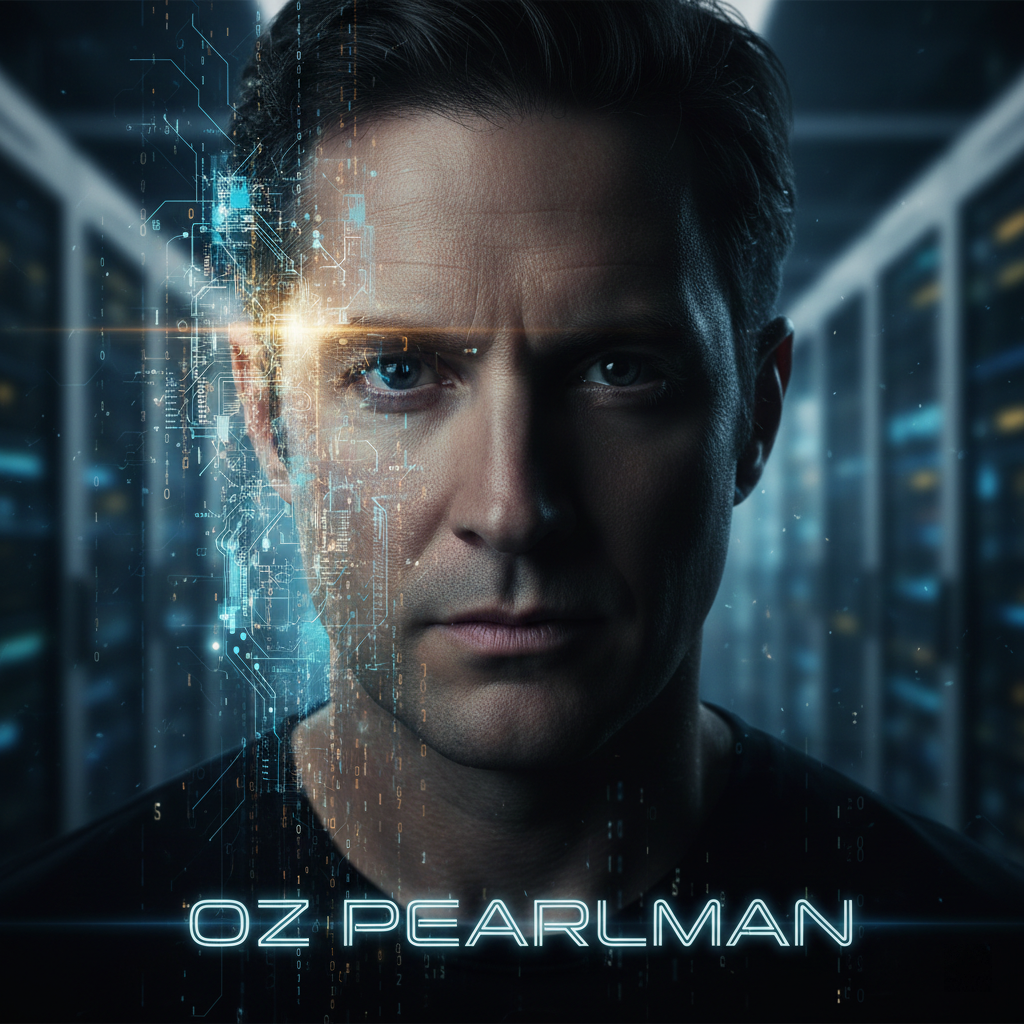
Oz Pearlman, the world-renowned mentalist, doesn’t claim to have supernatural powers. In fact, he vehemently denies them. Instead, he claims something far more unsettling: human beings are drastically less unique and far more programmable than we believe. By treating the human mind as a predictable software with exploitable “glitches”—from the way we process fear to how we edit our own memories—Pearlman performs feats that seem impossible. But as we peel back the layers of his performances, from the TED stage to high-stakes podcast interviews, a startling truth emerges: he isn’t reading your mind. He’s reading your data.

The “Invisible Deck” & The Etch-A-Sketch Memory
One of Pearlman’s most disarming techniques involves an “invisible deck of cards.” He asks a subject to imagine picking a card, holding it, and placing it back. Moments later, he reveals the exact card they “imagined.” How?
Pearlman reveals that human memory is not a video recorder; it is an Etch-A-Sketch. When we are confused, distracted, or misdirected, our brain’s “drawing” of reality gets shaken. In that moment of cognitive chaos—a “buffer overflow,” in tech terms—the mentalist steps in. He describes this as “editing memories.” By subtly guiding a subject’s focus, he can delete entire sequences of events (like him throwing a deck of cards to the ceiling) from their recollection. The subject remembers the miracle, but their brain has deleted the mechanics. It’s a terrifying lesson in the fragility of eyewitness testimony: if you control the focus, you control the history.

The “Lather, Rinse, Repeat” Protocol: A Social Cheat Code
While guessing a bank PIN is a neat party trick, Pearlman argues the real utility of his skill set is social engineering—specifically, the ability to build instant, deep rapport. He introduces a protocol he calls “Lather, Rinse, Repeat,” repurposed for social survival. It is the antidote to the modern epidemic of forgetting names the second we hear them.
Most of us treat introductions as a “read/write” error; we are so busy writing our own response script that we fail to “read” the input (the person’s name). Pearlman’s patch for this bug is simple but ruthless:
- Listen: Actually halt your internal monologue.
- Repeat: Say their name twice immediately.
- Reply: This is the anchor. You must attach a visual hook—either a compliment (“Ashley with the cool earrings”), a spelling check (“Steven with a V?”), or a connection (“My cousin is named Steven”).
It sounds elementary, but in practice, it forces the brain to move the data from short-term RAM to the hard drive. It transforms a fleeting interaction into a permanent file.

The “Dead or Alive” Algorithm
Perhaps the most fascinating display of Pearlman’s “source code” analysis is his ability to determine if a subject is thinking of a dead or living celebrity. He doesn’t need to ask questions. He looks at the physiology of the thought.
When a subject thinks of a living person—like Barack Obama or a crush—their physiology reacts to the “heat” of life. They smile, they lean in, their blood flow subtly increases; they give off “warm” signals. When they think of a deceased person, the body subconsciously mimics the concept of death: they become still, hands often retreat to pockets, and the face goes stoic. Pearlman isn’t guessing; he’s reading the metadata of your body language. In a stunning demonstration, he correctly identified that a random audience member was thinking of Barack Obama simply by having another stranger “channel” the thought. It implies that our thoughts leak out of us constantly, broadcast on frequencies we simply haven’t tuned our receivers to catch—until now.

The “Inception” of Choice
The uncomfortable conclusion of watching Pearlman work is the realization that “free will” might be the biggest illusion of all. Whether he is influencing a podcast host to switch from the letter ‘L’ to ‘S’ to land on the name “Jules,” or planting the idea of a Cybertruck by manipulating the context of a conversation, he proves that choices can be engineered.
He describes this as a “dual reality.” The audience sees one narrative, the subject sees another, and the mentalist controls the bridge between them. He narrows your choices down from infinite to one, all while making you feel like you are the master of your own destiny. In a world increasingly run by algorithms designed to predict our next purchase, watch, or vote, Pearlman is the analog warning: We are programmable. The only defense is to understand the code.

Stop scrolling. Look up at the next person you see. Don’t just look at them—read them. Are they warm? Cold? Distracted? The data is there. You just have to install the update.